Imagine you’re deep into a gravel race — a long-distance event held on dirt roads and mixed terrain, the kind where your car is parked at a start-finish line that feels like another country. At mile 62, your rear tire starts hissing. What happens next depends almost entirely on what’s packed under your saddle or stuffed into your jersey pocket. A flat tire (or more accurately, a puncture that deflates your tire) in that moment is not a question of if you’ve prepared — it’s a question of how well. This guide breaks down the repair kit options that serious gravel riders are actually running in 2025 and 2026, explains the real tradeoffs between systems, and gives you a clear decision framework so you can stop second-guessing your kit before your next event.
One quick primer: most modern gravel bikes run tubeless tires — tires sealed directly to the rim with no inner tube, filled with liquid sealant that plugs small holes automatically. When sealant can’t handle a larger gash, you need a tubeless plug tool to physically fill the hole. Some riders still run tube-type setups with a traditional rubber inner tube inside the tire, which requires carrying a spare tube and patch kit. Both systems have their repair logic, and we’ll address both — but tubeless dominates gravel racing for a reason.
Why Your Repair Kit Is Performance Gear, Not an Afterthought
Gravel racing culture has matured fast. Per Outside Online’s gravel gear coverage, riders who once tossed a random patch kit into a bag now treat their repair system with the same specificity as their drivetrain choice. That shift is driven by three realities:
1. Race time is real. A fumbled repair at mile 40 of a 200-mile event doesn’t just cost seconds — it costs the pack you were riding with, your nutrition rhythm, and potentially your finish. BikeRadar’s best tubeless repair kit roundup notes that practiced riders with a quality plug tool can execute a tubeless repair and re-inflate in under three minutes. An unfamiliar or poorly designed tool in cold, tired hands can stretch that to eight or ten.
2. Weight compounds. Every gram you carry over 60+ miles accumulates in ways that a 20-mile training ride won’t reveal. The difference between a 28g plug tool and a 52g plug tool feels academic at your kitchen table. It does not feel academic at hour five.
3. Redundancy vs. minimalism is a real tension. Carry too little and one bad puncture ends your day. Carry too much and you’re hauling security theater for scenarios that almost never happen.
The Core Decision Matrix
Before we get into specific products, here’s the framework:
| Scenario | Recommended System |
|---|---|
| Tubeless tire, puncture under 6mm | Sealant + single plug tool |
| Tubeless tire, larger gash or sidewall | Plug tool + backup tube |
| Tube-type setup | Spare tube + patch kit + tire levers |
| Any setup, re-inflation | CO₂ cartridge(s) or compact pump |
Tubeless Plug Systems: Where the Real Decisions Live
If you’re running tubeless (and for gravel racing, you almost certainly should be), your plug tool is the centerpiece of your kit. The market in 2025–2026 has consolidated around a few clear tiers.
The Dynaplug Micro Pro — The Weight-Weenie Standard
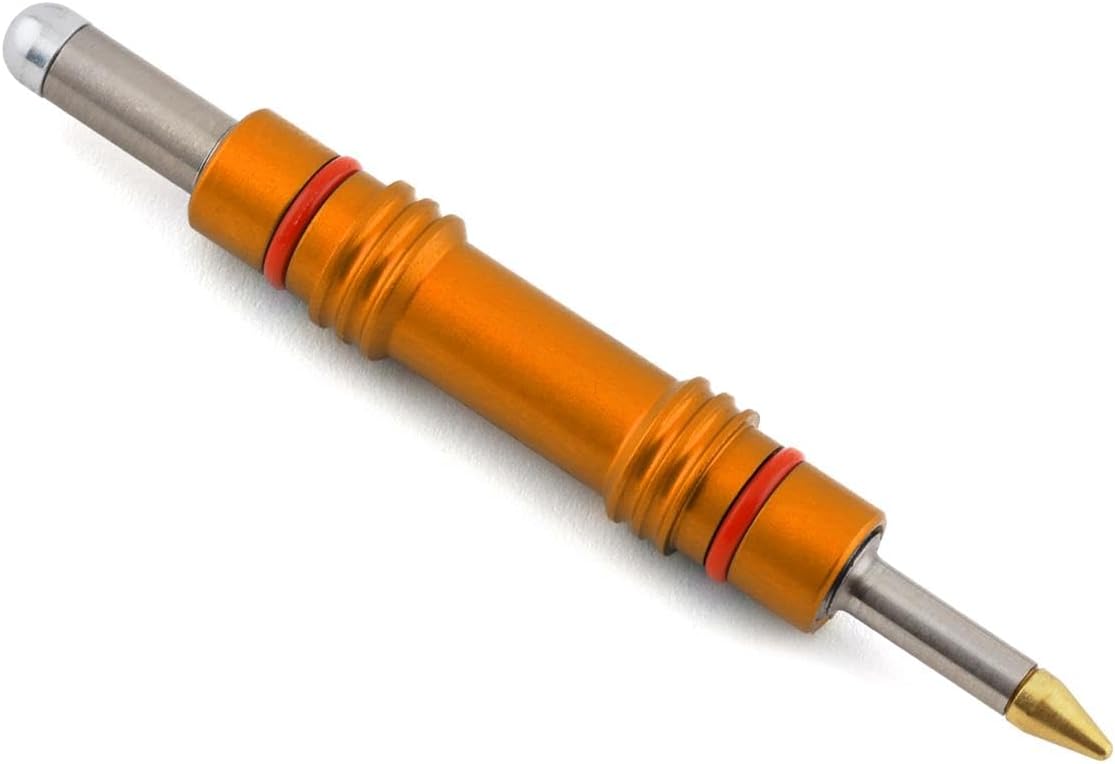
The Dynaplug Micro Pro with its carbon fiber body sits at the top of the weight conversation. Published specs put it at roughly 14 grams for the tool itself — lighter than most CO₂ cartridge caps. Pinkbike’s Dynaplug Micro Pro review describes it as “the closest thing to a no-compromise plug tool for road and gravel riders who count grams,” noting that the brass-tip plugs seat quickly without requiring you to remove the tool and leave a plug tail to trim. The Micro Pro’s design means plug installation and tool removal happen in one motion.
The tradeoff: price. The carbon-body version sits in the $90–$100 range. For a tool you may use once a season (or never, if sealant handles everything), that’s a real number to justify. The aluminum-body Dynaplug Racer offers similar plug compatibility at a lower price and slightly higher weight — still under 30g. For most intermediate gravel racers, the Racer hits the better value-to-weight ratio.
Muc-Off Tubeless Plug Kit — The Mid-Tier Workhorse
Muc-Off’s Dynaplug-compatible kit (their tubeless plug system) comes packaged with plugs, a storage canister, and a compact inserter tool. BikeRadar’s kit roundup rates it well for value, noting it ships with enough plugs for multiple repairs and the canister doubles as a handlebar-bag-friendly carry option. It’s meaningfully heavier than the Dynaplug Micro Pro but gives you redundancy built in. At around $30–$45 depending on the bundle, it’s the smart pick if you’re not yet convinced you need to spend $90 on a carbon handle.
Lezyne Tubeless Kit — The Organized Option
Lezyne has built a reputation for well-engineered storage and deployment. Their tubeless repair kit includes a compact case, plug tool, and a tire boot for sidewall damage. VeloNews’s tubeless setup guide calls out Lezyne’s kit organization as particularly useful for riders who want everything in one grab-and-go unit rather than loose components scattered across a jersey pocket. Weight isn’t class-leading, but the system reliability earns consistent praise from owners.
CO₂ vs. Mini Pump: The Inflation Argument
Plug the hole, and you still need air. This is where riders consistently misjudge their kit.
CO₂ inflators use small compressed-gas cartridges (typically 16g or 25g cartridges by weight of CO₂ content) to fill a tire almost instantly. For racing, the speed argument is compelling. The Genuine Innovations Ultraflate Plus and Lezyne Control Drive CO₂ are both widely reviewed as reliable, minimal-fumble options with good chuck-to-valve connections. Cycling Weekly’s CO₂ vs. mini pump analysis points out that a 16g cartridge will adequately inflate a 700×40 gravel tire to a functional pressure (not race pressure, but rideable), while a 25g cartridge gives you more working headroom.
The downsides of CO₂ are real:
- CO₂ permeates through latex-based sealant faster than air, meaning tire pressure can drop meaningfully within an hour or two
- You get one shot per cartridge — misfire the chuck and you’ve wasted your inflation
- Carrying two cartridges adds weight but is almost always the right call
Mini pumps eliminate the one-shot anxiety and the CO₂ permeation issue. The Lezyne Micro Floor Drive and Topeak Racerocket are the names that keep appearing in recommended kits at BikeRadar and VeloNews. Neither will inflate a tire to full pressure as fast as CO₂, but both will get you there, and you can pump as many tires as your arms allow. Weight penalty is 60–120g depending on the pump — meaningful but not race-breaking for most riders.
By the numbers:
- 16g CO₂ cartridge: ~30g total with inflator head, one use
- 25g CO₂ cartridge: ~45g total with head, one use with more volume
- Lezyne Micro Floor Drive: ~105g, unlimited uses
- Carrying two 16g cartridges + inflator: ~80g total
For a race context, the dominant pattern among competitive gravel riders (per aggregated reviews and race reports on VeloNews and Cycling Weekly) is one CO₂ for speed, one backup CO₂ or a mini pump for contingency.
Don’t Forget: The Backup Tube and Tire Levers
Tubeless plug tools handle punctures. They do not handle a tire that’s been torn badly enough to lose its bead (the edge that seals against the rim) or a catastrophic sidewall failure. For races longer than 50 miles, most experienced gravel riders carry one spare tube — not because they expect to use it, but because it converts an otherwise race-ending failure into a slow-but-rideable situation.
A tube adds 80–200g depending on your tire size and tube weight. Lightweight latex tubes exist (some under 80g for 700c sizes) if you’re serious about minimizing that penalty. Pair that with two tire levers — the Pedro’s Tire Levers and Park Tool TL-1.2 are the names that appear most consistently in kit recommendations across Pinkbike and BikeRadar for reliability without rim damage risk.
The Complete Gravel Race Kit — Assembled
Here’s how a realistic competitive gravel kit stacks up at each weight tier:
Ultralight (sub-100g total kit weight):
- Dynaplug Micro Pro carbon (~14g) + 3 plugs
- Two 16g CO₂ cartridges + lightweight inflator head (~80g)
- No tube, no levers
- Risk: a catastrophic failure ends your race
Balanced (120–180g):
- Dynaplug Racer aluminum or Muc-Off kit (~35–50g)
- One 16g CO₂ + one 25g CO₂ + inflator (~90g)
- One lightweight tube (~100g, carried separately or skipped if confident)
- Two tire levers (~20g)
Redundancy-first (200g+):
- Lezyne or Muc-Off plug kit with multiple plugs
- Mini pump + one CO₂ cartridge
- Spare tube + tire levers + tire boot for sidewall damage
- Best for: ultra-distance events, remote courses, or new-to-tubeless riders
The Decision Rule
If you’re racing a route with support vehicles or neutral rollout support, you can lean toward ultralight — someone else carries the redundancy. If you’re self-supported past mile 50 with no bail-out option, never leave without a spare tube.
Here’s the honest if/then framework:
- If you’re chasing a podium on a well-supported 100-mile course: Dynaplug Micro Pro + two CO₂ cartridges, no tube. Optimize for speed and weight.
- If you’re finishing a 200-mile gravel event solo: Balanced kit minimum, redundancy-first preferred. The gram savings from going ultralight are worth less than a DNF.
- If you’re new to tubeless repairs: Practice your plug technique at home before race day. The tool matters less than your familiarity with it under pressure. Every review at Pinkbike and BikeRadar echoes the same point — the fastest repair kit is the one you’ve already used.
Your repair kit is not insurance you hope to never touch. At gravel racing distances, it’s active race equipment. Choose it with that weight — and that respect — in mind.