Here’s something most experienced riders will admit in private: CO2 cartridges are great — until they’re not. One fumbled chuck fitting in cold fingers, one faulty cartridge, and you’ve just vented your entire ride’s inflation budget into the shoulder of a gravel road. A mini pump — a compact, portable hand pump small enough to slip into a jersey pocket or strap to your frame — is the backup plan (or primary plan) that never runs out of uses. This article is for riders who’ve decided they want that reliability: we’re ranking the best manual mini pumps and the newer breed of electric mini pumps (battery-powered, motorized inflators the size of a large marker) across the key decision dimensions: pressure ceiling, effort, weight, and value. Whether you’re a road rider paranoid about flats 40 miles from the car or a mountain biker who patches tubeless tires on the trail, there’s a pump on this list that fits your kit.
After the on-ramp: if you already know your presta from your schrader (the two common valve types on bike tubes — narrow-pin road valves vs. the wider automotive-style valves), you’re ready for the ranked breakdown below.
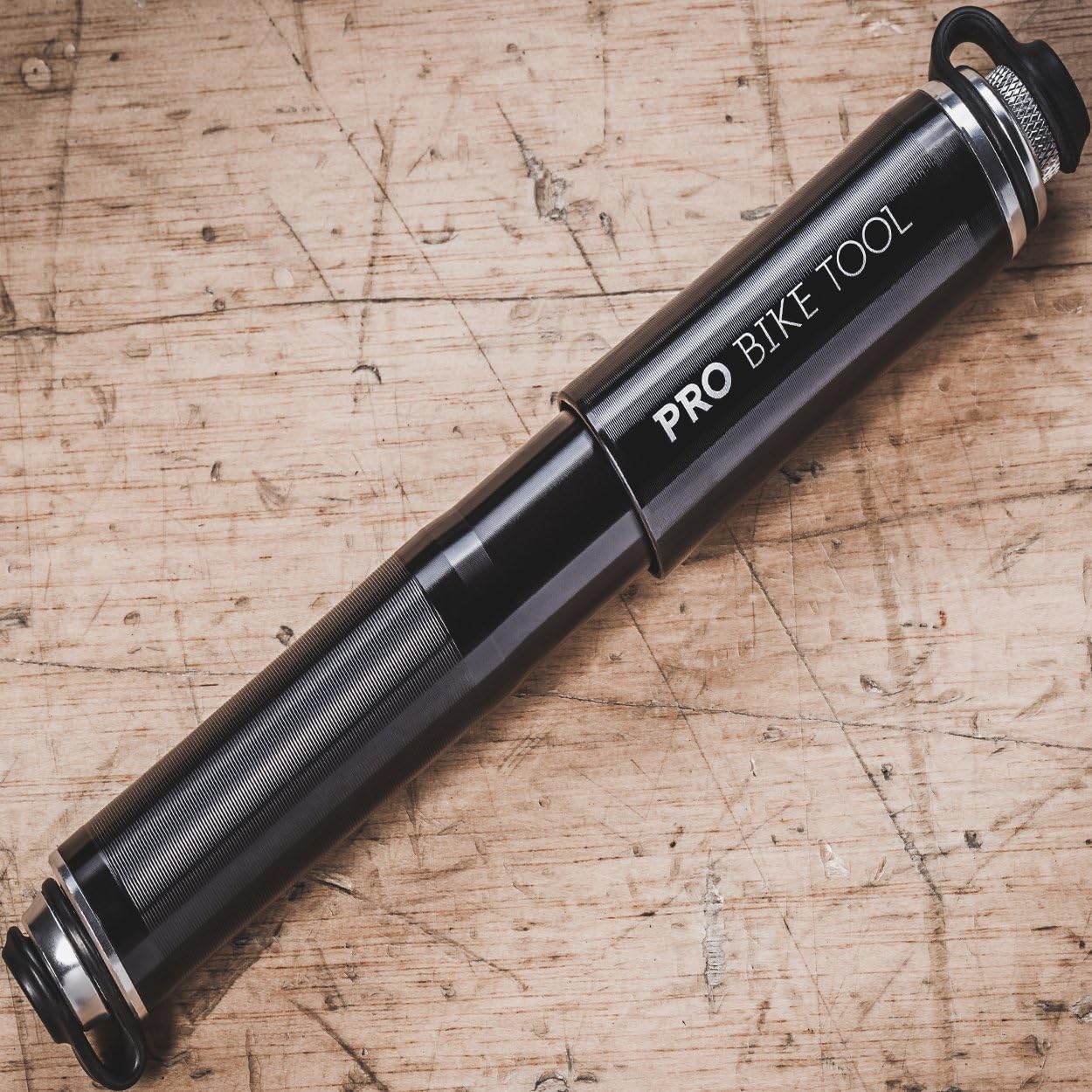
| EDITOR'S PICK[SILCA Mini Bike Pump – Frame Mo…](https://www.amazon.com/dp/B06XFMBNMP?tag=greenflower20-20) | Mid-tier[LEZYNE Pocket Drive HP Compact…](https://www.amazon.com/dp/B0876G7T7H?tag=greenflower20-20) | Budget pick[Pro Bike Tool Mini Bike Pump wi…](https://www.amazon.com/dp/B019V1PW92?tag=greenflower20-20) | |
|---|---|---|---|
| Max PSI | — | 160 | — |
| Material | — | CNC Aluminum | — |
| Mount type | Frame Mount | — | — |
| Hose type | Expandable Hose | ABS Flex Hose | — |
| Pump-only option | — | ✓ | — |
| Valve compat | — | Presta & Schrader | Presta & Schrader |
| Price | $60.00 | $34.99 | $21.99 |
| See on Amazon → | See on Amazon → | See on Amazon → |
Why Some Riders Skip CO2 Entirely — and Why That’s a Reasonable Call
CO2 inflators have real advantages — speed, low weight, near-zero effort. But the tradeoffs are legitimate, and Bicycling’s pump coverage and BikeRadar’s roundup of mini pumps both note that experienced riders often keep a mini pump as primary or redundant kit for these reasons:
Single-use risk. Each cartridge is a one-shot tool. Two flats on a long ride — not unusual on rough gravel — means carrying two cartridges minimum. The math gets expensive fast: 16g cartridges run roughly $2–$4 each at retail, and CO2 also permeates through tube rubber faster than air, meaning tires flatted and re-inflated with CO2 often need topping off within days.
Cold-weather reliability. CO2 canister pressure drops in cold temperatures — a well-documented gas physics issue that Cycling Weekly’s portable pump guide flags specifically for winter and alpine riders. Frozen fingers plus a pressurized cartridge is also a frostbite risk.
Tubeless compatibility complications. CO2 can interact with some tubeless sealants, potentially coagulating them prematurely. Outside Online’s portable pump roundup calls this out as a reason gravel and mountain bikers sometimes prefer manual inflation even when tubeless plug repairs are on the table.
Environmental footprint. Single-use aluminum cartridges add up. Reusable pumps eliminate that waste stream entirely.
None of this makes CO2 wrong — it’s genuinely excellent for road racers who want the fastest possible inflation at minimum weight. But if any of the above resonates, a quality mini pump is a smarter tool.
The Decision Frame: Manual vs. Electric Mini Pumps
Before the ranked list, understand the core tradeoff so you can self-select:
Manual Mini Pumps
- Ceiling: Quality manual minis top out around 100–120 PSI for road tires, though getting there takes real effort — often 200+ strokes for a road tire from flat to race pressure. Mountain bike tires (typically 25–35 PSI) are dramatically easier.
- Weight: The lightest (aluminum/carbon construction) hit 55–75g. Midrange options land at 80–110g.
- Cost: $25–$80, with a clear performance step-up around the $40–$60 mark.
- Who it’s for: Riders who want zero dependency on batteries or disposables. Reliability absolutists. Mountain bikers who just need trail pressure to limp home.
Electric Mini Pumps
- Ceiling: Most are rated 100–120 PSI. They stop automatically at a preset pressure.
- Weight: Heavier — typically 200–350g including the internal battery.
- Cost: $50–$130 at the quality tier worth buying.
- Who it’s for: Riders who want CO2-level convenience without disposables. E-bike commuters (a battery tool fits the e-bike mindset). Older or injury-affected riders for whom hand-pumping to 100 PSI is physically difficult.
The honest tradeoff: Electric pumps add weight but remove effort. Manual pumps add effort but remove complexity. Neither is objectively superior — it’s a values match.
Mini Pumps Ranked: Our Editorial Picks by Category
Best Manual Mini Pump Under $40: Lezyne Pressure Drive
Lezyne’s Pressure Drive is the pump BikeRadar’s mini pump guide repeatedly uses as a benchmark — and for good reason. The CNC-machined aluminum body lands around 80g, the dual-sided flex hose connects to both presta and schrader valves without an adapter swap, and owners consistently report that the pump-to-pressure ratio (effort per PSI) is better than comparably priced competitors.
Spec sheets put the pressure ceiling at 120 PSI, which is functional for most road tires, though reviewers note the last 20 PSI above 100 requires significant effort. For mountain bikers running 25–35 PSI tubeless setups, this pump barely breaks a sweat. Wirecutter’s pump coverage has flagged Lezyne as a best-in-class value at this price tier.
If X, then Y: If your tires run below 80 PSI (most gravel and MTB setups), the Pressure Drive is almost certainly the best value manual mini pump on the market right now.
Best Manual Mini Pump $40–$80: Topeak Pocket Rocket Master Blaster
Topeak’s Pocket Rocket has been a category anchor for years, and the Master Blaster variant earns its place by adding a pressure gauge (a small analog meter built into the barrel) — which turns out to matter more than it sounds. Without a gauge, “enough pressure” is guesswork. With one, you can dial tubeless setups precisely, confirm you’ve hit trail-ride-safe pressure, and avoid the over-inflation risk that can unseat tubeless beads.
Published specs put the weight at approximately 95g and the pressure ceiling at 120 PSI. Cycling Weekly’s portable pump guide specifically calls out the gauge as a meaningful upgrade over bare-barrel pumps for riders who care about setup precision. Owners in long-run reviews note the build quality has held up over multiple seasons of carry use.
If X, then Y: If you run tubeless tires and want to set pressure precisely trailside rather than guessing, the Master Blaster’s gauge pays for itself quickly in sealant life and handling confidence.
Best Ultralight Manual Pick: Silca Tattico Bluetooth Mini Pump
For the weight-obsessed — road racers, bikepacking gram-counters — Silca’s Tattico is in a category of its own. Published specs clock it at approximately 56g, and the optional Bluetooth variant connects to a smartphone app for real-time pressure reading, replacing a traditional gauge with software.
BikeRadar’s roundup places the Tattico in the premium tier, noting it’s engineered to the same tolerances as Silca’s track pumps. The price (around $65–$85 depending on variant) is premium for a mini pump, but reviewers consistently note the build quality justifies it for riders who treat their kit as performance gear. The pressure ceiling per spec is 120 PSI.
The tradeoff to name explicitly: At 56g, you’re making some sacrifice in pump volume per stroke — meaning more strokes per fill compared to a larger-barreled pump. Owners report this is noticeable when pumping from flat (as opposed to just topping off). If you’re frequently pumping from zero, the slightly heavier Topeak may be less fatiguing overall.
If X, then Y: If you’re shaving grams for racing or long bikepacking routes where every gram is deliberate, the Tattico is the pick. If you flat and re-inflate often under fatigue, spend the extra 40g and get more barrel volume.
Best Electric Mini Pump: Cycplus Cube / Xiaomi Variant Tier
The electric mini pump category has matured significantly by mid-2026. The leading picks cluster around the Cycplus Cube form factor and similarly designed competitors in the $60–$100 range. These are roughly the size and weight of a Bluetooth speaker, with built-in rechargeable batteries (charged via USB-C), auto-stop pressure setting, and LED displays showing real-time PSI.
Outside Online’s portable pump coverage notes that electric mini pumps have improved meaningfully in the past two years — particularly in pressure ceiling (now reliably reaching 100 PSI on quality units) and in motor longevity. Owners report getting multiple full inflations per charge on road tires, with the battery lasting a full riding season of occasional use before needing a charge.
By the numbers — electric mini pump decision math:
| Metric | Manual Mini (mid-tier) | Electric Mini (quality tier) |
|---|---|---|
| Typical weight | 80–110g | 220–300g |
| Time to 80 PSI (road tire) | ~4–8 min effort | ~90 sec, no effort |
| Cost | $35–$80 | $60–$100 |
| Failure modes | Hose seal, valve chuck | Battery death, motor fault |
The weight penalty is real — you’re adding roughly 150–200g over a manual. But the effort elimination is equally real, and for e-bike commuters or riders with hand/wrist issues, that’s the whole game.
If X, then Y: If you’re a commuter or recreational rider who flats infrequently but wants CO2-level ease without disposables, and you can absorb the weight penalty, a quality electric mini pump is worth the premium. If you’re a racer or weight-sensitive tourer, manual wins.
What to Ignore on the Spec Sheet (and What Actually Matters)
A quick note for buyers doing deep research: maximum PSI ratings are often misleading. A pump rated to 160 PSI is not necessarily better for your 90 PSI road tire than one rated to 120 PSI — what matters more is stroke volume (how much air moves per pump) and build quality of the chuck (the fitting that attaches to your valve). A high-PSI rating achieved through a tiny bore and hundreds of exhausting strokes is worse in practice than a 120 PSI ceiling achieved through a larger bore in fewer strokes.
Wirecutter’s pump evaluation criteria explicitly flags this: pressure ceiling is less useful than stroke efficiency for real-world trail-side use. Focus on owner reports of “how hard was it to actually get to riding pressure,” not the spec sheet maximum.
The Clear Decision Rules
- Under $40, tube-type tires, MTB: Lezyne Pressure Drive. Full stop.
- Tubeless setup, want gauge precision, $40–$80: Topeak Pocket Rocket Master Blaster.
- Weight-first, road racing or bikepacking: Silca Tattico.
- Commuter, e-bike rider, or effort-averse, can absorb weight: Electric mini pump (Cycplus-tier).
- Already have CO2, want backup only: Any sub-$30 manual mini from Lezyne or Topeak will cover you — the cheap one that lives in your bag and never gets used is fine.
The best pump is the one that’s actually with you when you flat. Buy the one that fits your carry system, matches your tire pressure range, and that you’ll actually remember to pack.