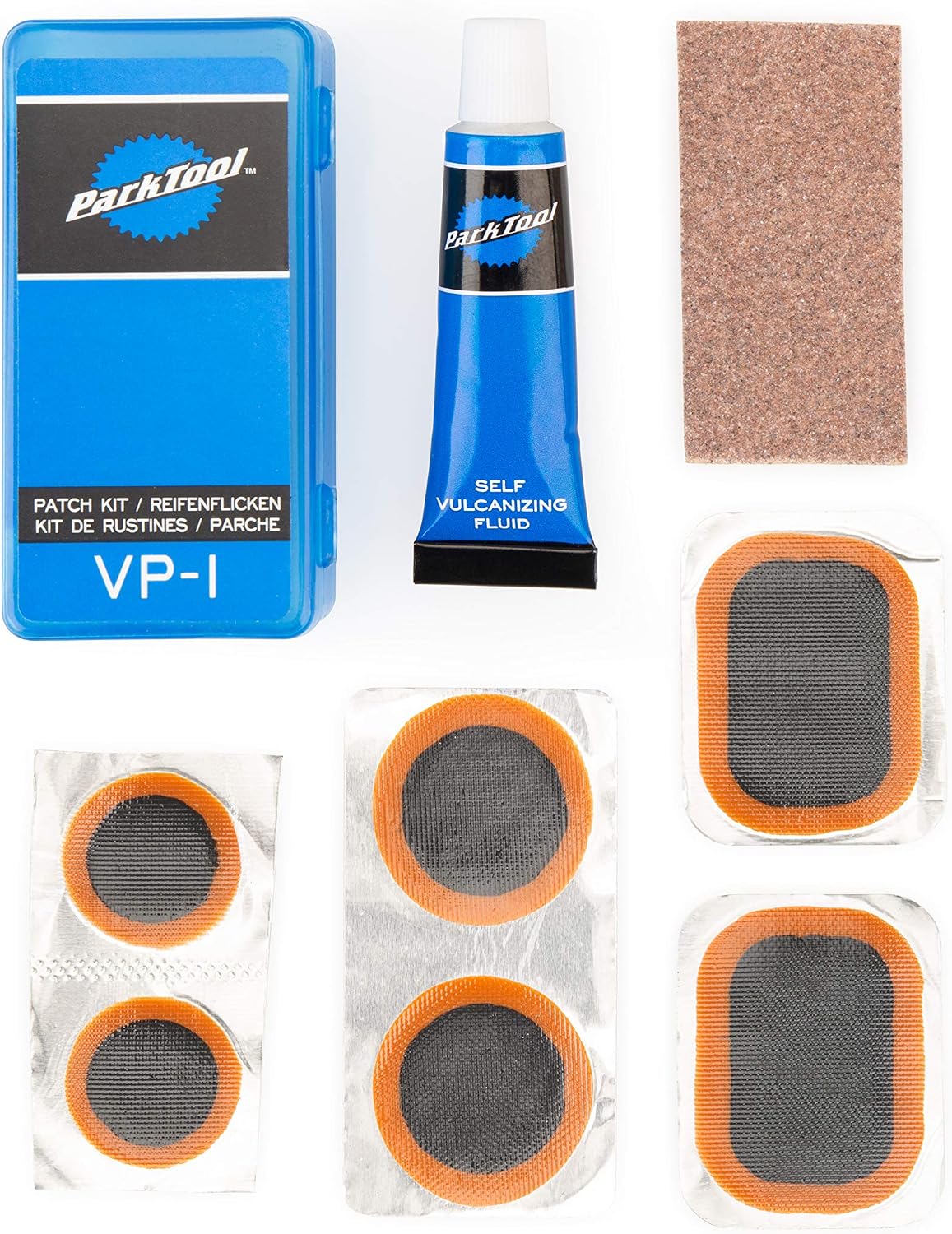
Here’s the thing about flat tires: they happen to everyone, at the worst possible moment, usually far from home. An inner tube (the inflatable rubber ring that lives inside a traditional tire and holds your air) can fail from a sharp rock, a piece of glass, or even a pinch from your own rim. A patch kit is simply the collection of materials — glue, rubber patches, sandpaper — that lets you seal that hole and ride on rather than walk out. At under $15, these kits are the most accessible repair tool in cycling, and there’s a real argument that every rider, from a first-time commuter to a weekend gravel enthusiast, should have one stashed somewhere on their bike. This guide breaks down exactly what you get at different price points in the sub-$15 bracket, where the cheap options earn their keep, and where they’ll quietly let you down.
Why the Under-$15 Category Still Matters (Even If You’re Tubeless)
If you run tubeless tires — a setup where sealant liquid inside the tire plugs small punctures automatically, eliminating the inner tube — you might wonder whether patch kits are even relevant to you anymore. They still are, for two reasons.
First, a significant share of riders — commuters, casual cyclists, riders on older bikes, and anyone who hasn’t yet made the jump — still run tubed setups. For them, a patch kit is the most cost-efficient repair tool on the market. Second, even tubeless riders typically carry a spare inner tube as a backup for catastrophic failures a plug can’t fix. If that backup tube takes a second hit, a patch kit is what saves your ride.
The under-$15 market breaks into three rough tiers: the sub-$5 bulk kits (dominated by Slime, which sells a kit in many retailers for around $3), the $5–$10 mid-range (Park Tool’s GP-2 and Rema Tip Top kits live here), and the $10–$15 upper bracket where you find more robust cement formulations and better component quality from brands like Lezyne and Genuine Innovations.
The decision framework isn’t complicated, but the tradeoffs are real. Let’s map them out.
By the Numbers
| Kit Tier | Price Range | Patches Included | Glue Type | Shelf Life (Opened) |
|---|---|---|---|---|
| Budget (Slime, generic) | $2–$5 | 6–10 | Vulcanizing cement, thin | 6–12 months |
| Mid-range (Park Tool GP-2, Rema TT01) | $5–$9 | 6 | Vulcanizing cement, thicker | 12–18 months |
| Upper budget (Lezyne, Genuine Innovations) | $10–$15 | 5–8 | Vulcanizing cement or adhesive pre-applied | 12–24 months |
Shelf life figures reflect manufacturer guidance and aggregate owner reports; actual longevity depends heavily on storage conditions.
What the $3 Slime Kit Gets Right — and Where It Falls Short
The Slime Emergency Tire Seal patch kit (found at most big-box retailers and online for roughly $3 as of mid-2026) is one of the most reviewed budget repair products in cycling. It’s worth taking seriously as a benchmark, because it represents what the absolute floor of the market offers — and the floor is more functional than many intermediate riders assume.
What it gets right: The Slime kit’s patches are adequately sized for the most common puncture types — small glass cuts and thorn holes under about 4mm. The included vulcanizing cement (the liquid adhesive that chemically bonds rubber to rubber) works. Owners consistently report that when the kit is used correctly and the tube surface is properly abraded and dried, patches hold. For a commuter who needs an emergency fix once or twice a year and stores the kit in a dry location, the Slime kit delivers on its core promise.
The quantity-to-price ratio is also genuinely hard to argue with. For $3, you get enough patches to cover several flats. Road Bike Rider’s flat tire repair guide notes that budget kits from mainstream brands like Slime generally use the same basic vulcanizing chemistry as pricier options — the gap is in execution quality, not fundamental approach.
Where it falls short: The glue tube is where budget kits consistently fail in real-world use. Owners across aggregated reviews report the same pattern: the cement tube dries out faster than premium alternatives, especially if the cap isn’t sealed perfectly after first use. The thin applicator and small glue volume make it easy to apply too little, which is the single most common cause of patch failure. BikeRadar’s tube repair guidance specifically flags glue volume and even application as the critical variables in patch success — factors where better-engineered kits give you more margin for error.
The sandpaper (used to rough up the tube surface so the glue bonds better) included in Slime kits is also frequently criticized by owners as too small to grip comfortably and too fine-grit to do the job efficiently. It works, but it requires more effort and patience than the metal scuffer tools included in mid-range kits.
The bottom line on Slime: it’s a legitimate product with a legitimate use case. If you’re a casual commuter, keeping one in your bag costs you almost nothing and covers you for basic emergencies. The failure mode isn’t the chemistry — it’s the kit’s low margin for user error and poor glue longevity once opened.
The Mid-Range Sweet Spot: Park Tool GP-2 and Rema Tip Top TT01
At $5–$9, you enter the category where most intermediate riders should be shopping. Two kits dominate this tier in terms of reputation and availability.
Park Tool GP-2 (~$7–$9 depending on retailer): Park Tool is the most recognized name in bike-specific tools, and the GP-2 reflects that pedigree. The kit includes six vulcanizing patches in two sizes, a metal tire lever, and a tube of Park Tool’s own vulcanizing cement. Reviewers at Bicycling consistently rate the GP-2 as the practical default for riders who want a dependable, no-drama kit. The cement tube is notably more substantial than budget options, and the metal cap creates a better seal — owners report the glue staying usable across a full season of storage in a saddle bag, which is the real-world test that matters.
The patches themselves are thicker and more pliable than Slime’s, which matters on tubes that flex under pressure. Cycling Weekly’s patch kit buyer’s guide highlights patch pliability as an underrated spec — a stiff patch on a soft tube is more likely to delaminate at the edges over time.
Rema Tip Top TT01 (~$5–$7): Rema Tip Top is a German manufacturer that supplies the repair patches used by many professional mechanics. The TT01 kit is the brand’s entry-level consumer offering and punches well above its price. The vulcanizing cement is widely regarded by mechanics as high-quality, and the patches have a distinctive thin profile that conforms tightly to tube curvature. Road Bike Rider’s repair guides have referenced Rema’s cement quality as a benchmark comparison point against budget alternatives. The tradeoff: the kit packaging is minimal (no frills, no tire lever included), and the instructions assume you’ve done this before.
The decision rule at this tier: If you patch tubes more than twice a season, or if you ride in conditions where a failed patch means a long walk (trails, commutes without backup transport), spend the extra $4–$6 and buy the Park Tool GP-2 or Rema TT01. The glue quality and patch pliability reduce your failure rate meaningfully.
The $10–$15 Upper Bracket: When Does It Make Sense?
At $10–$15, you’re looking at kits from brands like Lezyne and Genuine Innovations that position themselves as precision gear rather than emergency consumables.
The Lezyne Smart Kit (~$12–$14) includes a higher patch count, a quality metal container, and a more refined cement applicator. Wirecutter’s bike repair coverage notes Lezyne’s reputation for “well-organized, durable” kit packaging — which matters more than it sounds. A repair kit that rattles around in your saddle bag and loses components is a $0 kit when you need it. The Lezyne tin holds everything securely and protects the cement from temperature swings better than plastic pouches.
Genuine Innovations also offers patch kits in this range, though the brand’s real strength is in CO₂ inflator systems. Their patch kits are competent but are more logically purchased as part of a bundled repair system rather than standalone.
The honest tradeoff: For pure patch-kit functionality, the $10–$15 tier doesn’t deliver dramatically better results than a Park Tool GP-2. What you’re paying for is packaging durability, better long-term cement preservation, and — frankly — the satisfaction of organized, quality gear. For riders who treat their repair kit as part of a curated setup, that’s a reasonable investment. For riders who just need something that works, the mid-range is sufficient.
The Decision Framework: If X, Then Y
Here’s the clean version of everything above, formatted for a quick decision:
If you’re a casual commuter who patches once or twice a year and stores your kit in a bag at room temperature — the Slime ~$3 kit is a legitimate choice. Refresh it annually. Know its limits.
If you ride more than once a week and live in pothole or debris-heavy terrain, spending $6–$9 on a Park Tool GP-2 or Rema TT01 is a straightforward upgrade. The glue quality and patch durability reduce the chance of a roadside second failure.
If you’re still on tubes but ride seriously — gravel events, longer trail rides, anything where a failed repair has real consequences — treat the Rema TT01 as your floor and keep it fresh. Vulcanizing cement has a finite life once opened; replace your kit at the start of each season.
If you’re primarily tubeless but carry a backup tube: a compact mid-range kit like the Park Tool GP-2 makes sense as a once-or-twice-a-season insurance policy. Don’t buy the Slime kit for this application — the lower glue reliability is a liability exactly when the stakes are highest.
If you’re weighing whether to upgrade to tubeless at all: a $6 patch kit won’t make that decision for you, but it’s worth knowing that the patch kit becomes your contingency system, not your primary one. Pinkbike’s tubeless system comparisons and BikeRadar’s tubeless setup guides both note that even committed tubeless riders value having a reliable patch kit as a last-resort backup. The question isn’t patch kit versus tubeless — it’s which patch kit belongs in the backup role.
The category is unglamorous, the price points are low, and the decision genuinely isn’t complicated. But getting it wrong costs you a walk, a missed ride, or a frustrating roadside failure with a kit that dried out six months ago. A few dollars in the right direction is an easy call.