If you’ve ever flatted mid-ride and reached for your CO2 inflator — that’s the small handheld device that uses a pressurized gas cartridge to reinflate a tire in seconds instead of minutes — only to realize the cartridge is sitting on your workbench at home, you already understand why bundled kits matter. A CO2 inflator without cartridges is like a lighter without fuel: it’s technically all there, but it won’t do anything when you need it. This guide is specifically about kits that show up complete: inflator head and cartridges together, in one box, ready to drop into your saddle bag or jersey pocket. We’ll compare the leading bundled options across price tiers, explain the tradeoffs that actually change your buying decision, and give you a clear framework for matching the right kit to the way you actually ride.
| EDITOR'S PICK[CXWXC CO2 Inflator with 4 x 16g](https://www.amazon.com/dp/B0FNVQKJFX?tag=greenflower20-20)… | Mid-tier[CO2 Inflator Kit with 16g/ 25g](https://www.amazon.com/dp/B0DFLQLB16?tag=greenflower20-20)… | Budget pick[CXWXC 16g / 25g Threaded CO2 Ca](https://www.amazon.com/dp/B091DP68C8?tag=greenflower20-20)… | |
|---|---|---|---|
| Tubeless repair kit | ✓ | — | — |
| Cartridge size(s) | 16g | 16g / 25g | 16g / 25g |
| Threaded connection | — | — | ✓ |
| Valve compatibility | Presta / Schrader | Presta / Schrader | — |
| Cartridge count | 4 | 4 | 12 |
| Price | $28.89 | $21.32 | $18.99 |
| See on Amazon → | See on Amazon → | See on Amazon → |
Why Buying a Bundle Is Smarter Than It Sounds
Here’s the quiet frustration with the CO2 inflator category: most of the marketing photography shows the inflator head prominently and tucks the cartridge details into bullet-point footnotes. You buy based on the head, then realize cartridges are sold separately — or you get one cartridge when your tire actually needs two. A standard 16g cartridge, for context, inflates a road tire to roughly 80–90 psi; a mountain bike tire with more volume often needs a 25g cartridge, or two 16g rounds, to reach a usable pressure.
Bundled kits solve this by shipping everything together, usually at a small per-unit savings over buying components separately. More importantly, they remove a decision: you’re not sourcing compatible cartridges from a different brand and hoping the thread pattern matches. The inflator head and cartridges are pre-confirmed to work together.
The tradeoffs are real, though, and this is where buying intuition matters:
- Cartridge count in the bundle matters more than price per unit. A kit that includes two 16g cartridges at $22 is a better value for a road rider than a kit with one 25g cartridge at $18, even though the sticker price is higher.
- Cartridge size is tire-volume-dependent. Road, gravel, and MTB tires have genuinely different requirements. Buying a road-spec bundle for your 2.4” trail tire will leave you under-inflated and stranded.
- Inflator head quality varies significantly at the same price. A brass-valve chuck that threads onto your Presta or Schrader valve stem without leaking is not guaranteed just because a kit costs $30.
VeloNews’s race-day flat repair guide makes the stakes plain: a mis-spec’d cartridge wastes your only inflation shot and leaves you finishing a flat — the $4 mistake that costs you a race or a long hike out.
The Bundled Kit Landscape: Three Tiers Worth Knowing
Bundled CO2 kits fall into three meaningful price tiers. The differences are real, not marketing-driven, and matching the right tier to your riding style is the single most useful thing this guide can do for you.
Entry Tier ($10–$25): Get the Job Done, Probably
At this price, you’re typically getting an aluminum-body inflator head with a simple push-and-lock valve mechanism and two to four 16g threaded cartridges. Brands like Genuine Innovations and generic private-label options dominate this tier.
Genuine Innovations Ultraflate Plus with cartridges is the entry benchmark most reviewers return to. Bicycling’s “Best CO2 Inflators” buyer’s guide notes it consistently as the “just works” option for road cyclists who want inflation handled without overthinking it. The valve design threads on cleanly, the trigger releases gas in a controlled burst rather than all at once, and the 16g cartridge spec is right for most road and light gravel applications.
What you give up: no insulation on the inflator body, which means the rapid gas expansion during inflation makes the device extremely cold — cold enough to cause minor skin irritation if you hold it bare-handed for more than a few seconds, a commonly reported issue. Some riders wrap the body in a small foam sleeve as a workaround.
Best for: Road commuters, weekend warriors on standard 700c × 23–28mm tires, riders who want a backup that costs less than a replacement tube.
Not right for: Mountain bikers on high-volume tires, or anyone running tubeless who may need to seat a bead — bead seating requires a rapid high-volume blast, and a 16g cartridge may not deliver enough pressure for that job.
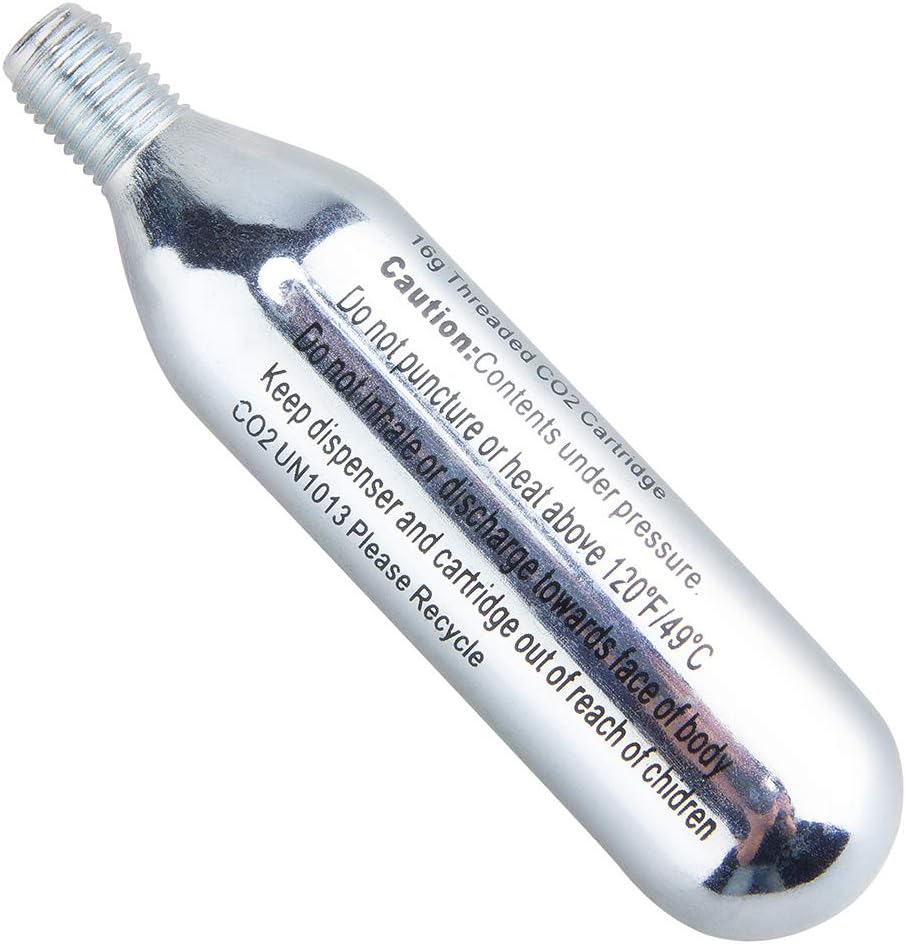
CXWXC
$18.99
In stock on Amazon
Check price on AmazonMid Tier ($35–$65): Where Most Serious Riders Land
This is the range where bundled kits start earning their cost in thoughtful engineering. You’re typically getting a machined aluminum or composite body with better grip ergonomics, a chuck that works with both Presta (the narrow, threaded valve found on most road and performance bike tubes) and Schrader (the wider valve, same type as a car tire) without an adapter swap, and two to three 25g cartridges or a mixed bundle of 16g and 25g cartridges.
Lezyne Control Drive CO2 kit appears in BikeRadar’s CO2 inflator reviews and cartridge sizing guide as a mid-tier standout. The Control Drive uses a twist-flow mechanism rather than a push trigger, giving you genuinely proportional control over how fast gas releases — useful when you’re trying to hit a target pressure rather than just “enough to ride home.” Owners report the dual-thread chuck as the feature they appreciate most after months of use, because it handles both Presta and Schrader valves without fussing with adapters. Lezyne bundled configurations typically include two 16g cartridges; for gravel riders on 38–45mm tires that pairing is adequate, but for MTB use you’ll want to source additional 25g cartridges separately.
Genuine Innovations Air Chuck Elite bundles, landing in the $45–$55 range, earn consistent attention for valve-threading reliability. Cycling Weekly’s tubeless and CO2 inflation explainer specifically calls out the Air Chuck Elite’s chuck as one of the most leak-resistant designs at this price — meaningful, because a leaky chuck means you’ve used your cartridge and your tire is still flat.
Best for: Road racers, gravel riders, and cyclists who’ve been burned by cheap chucks and want something that actually seals. Also solid for e-bike commuters who need reliability but don’t want to spend $90+.
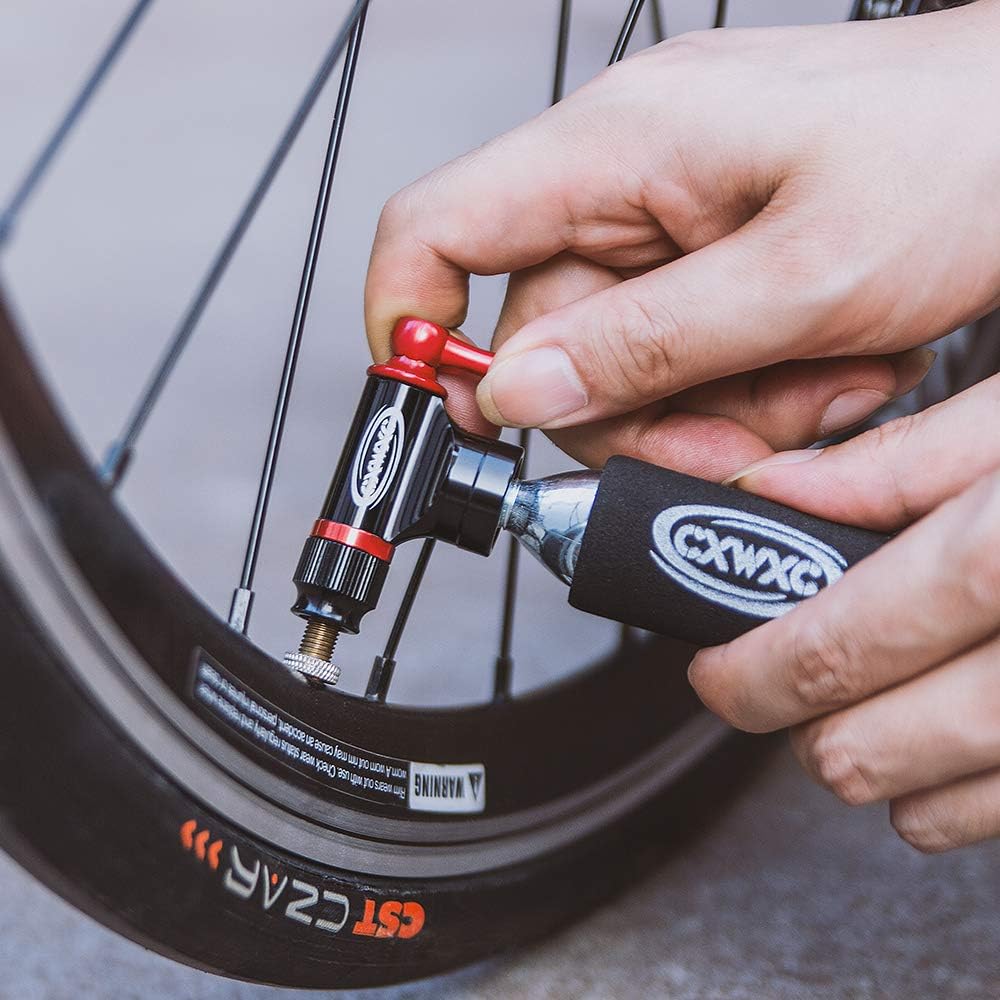
CO2
$21.32
In stock on Amazon
Check price on AmazonPerformance Tier ($70–$130): Weight, Materials, Features
Here, you’re buying a CO2 system the way a racer thinks about components: grams matter, feel matters, and you want the option to swap an empty cartridge fast enough that it doesn’t cost you a wheel change in a supported event.
Dynaplug CO2 Inflator bundles — often paired with the brand’s tubeless plug tools — represent a cross-category approach: the inflator head doubles as part of a tubeless repair system, so a single tool handles both plugging a puncture and reflating the tire. Pinkbike’s trail-repair kit roundup called out Dynaplug’s integration approach as the most logical for mountain bikers running tubeless setups, where the flat repair sequence is “plug, then inflate” rather than “swap tube, then inflate.”
Lezyne Trigger Speed Drive CO2 bundles sit in the $75–$100 range and are notable for a lever-actuated trigger that owners describe as more precise than push-type releases — useful when you’re inflating a road tire to 100+ psi and want to avoid over-inflating a 16g shot into a 25c tire, where you can blow past your target pressure fast if you can’t modulate gas flow.
Best for: Weight-conscious racers, mountain bikers running tubeless who want an integrated plug-and-inflate kit, endurance athletes who treat their saddle bag kit as precision gear.
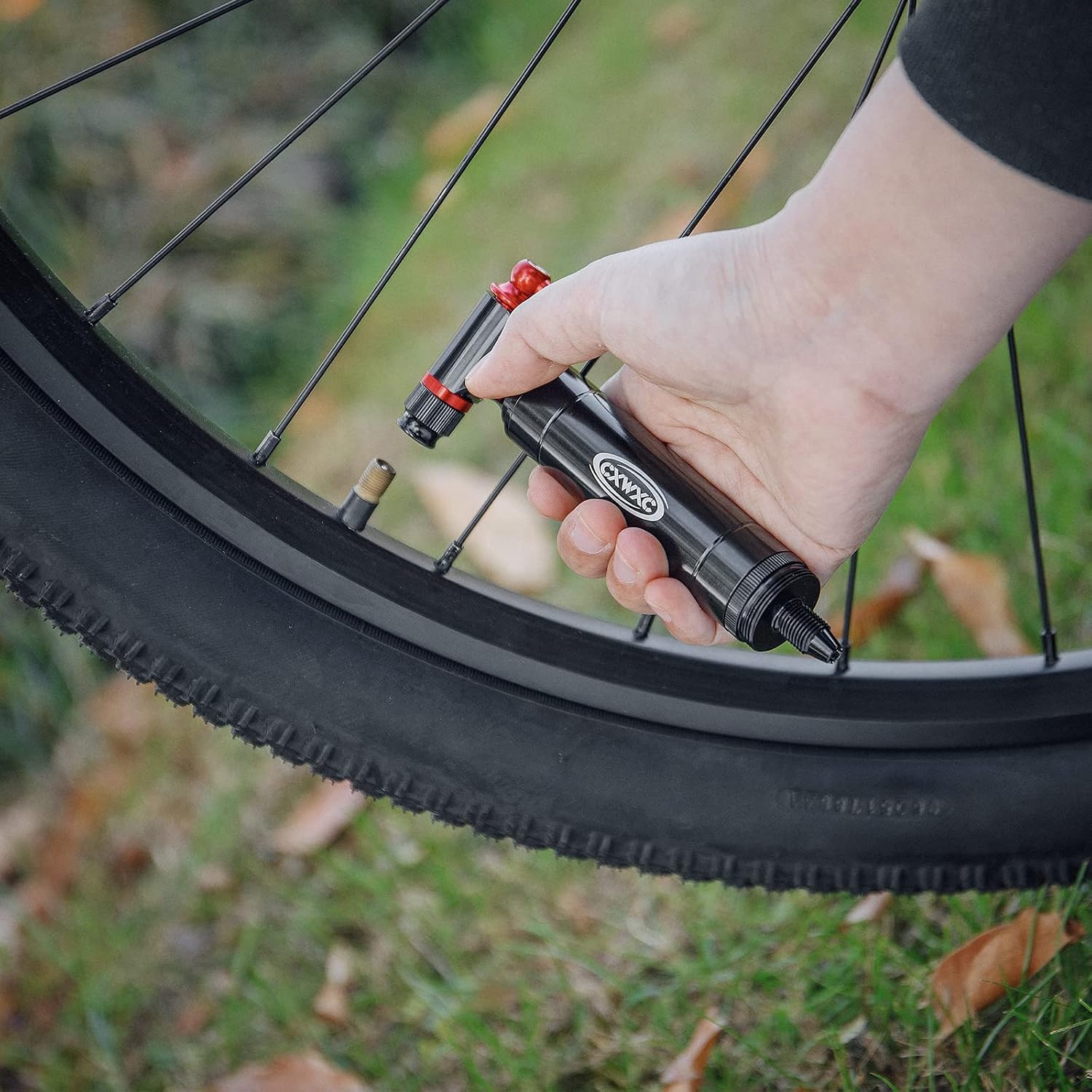
CXWXC
$28.89
In stock on Amazon
Check price on AmazonBy the Numbers: Cartridge Size vs. Tire Volume
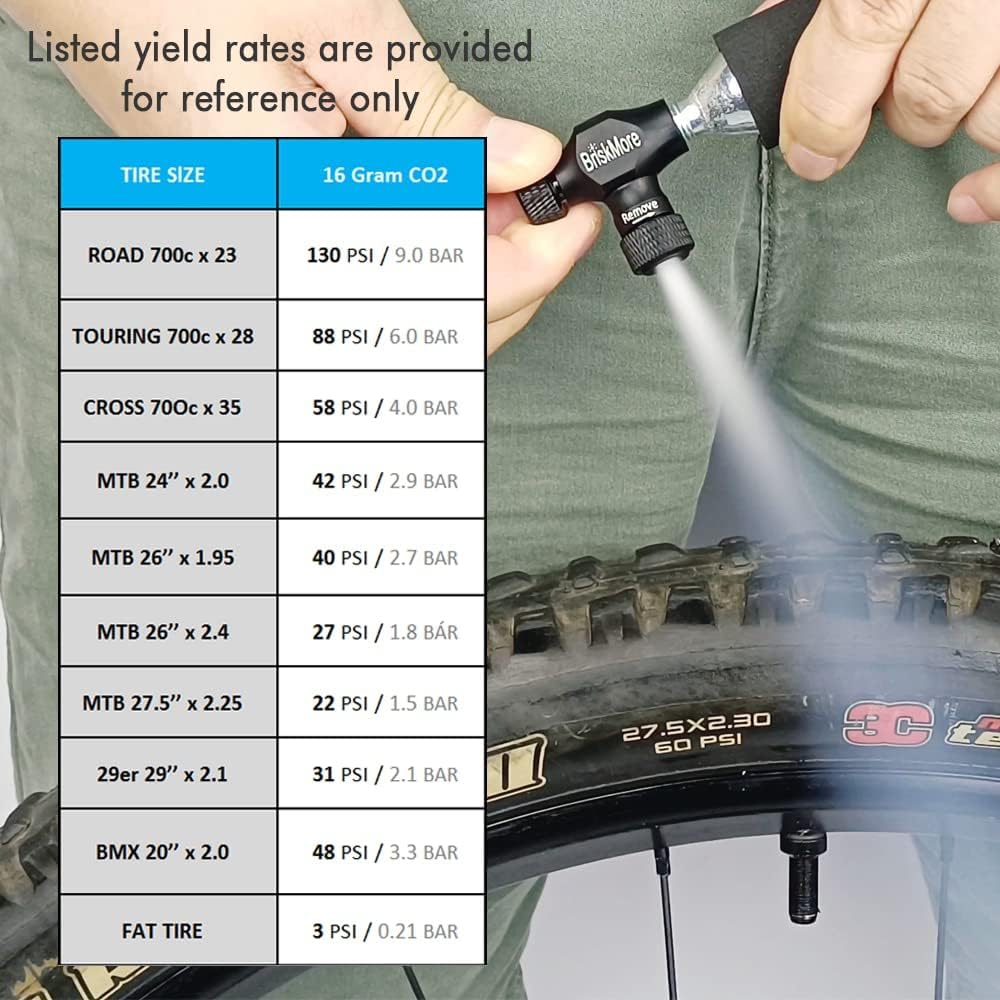
Matching cartridge size to tire volume is the most common buying mistake in this category. The table below draws on manufacturer-published cartridge capacity specifications, BikeRadar’s cartridge sizing guide, and Road Bike Rider’s CO2 vs. pump comparison feature.
| Tire Size | Recommended Cartridge | Approx. Inflated PSI (single cartridge) |
|---|---|---|
| 700c × 23–28mm (road) | 16g | 80–100 psi |
| 700c × 32–45mm (gravel) | 16g or 25g | 50–80 psi |
| 27.5” × 2.0–2.4” (trail MTB) | 25g | 25–40 psi |
| 29” × 2.2–2.6” (XC/trail) | 25g (may need 2×) | 20–35 psi |
If your tire volume sits at the upper edge of a cartridge’s range, carry a spare. The cost of a second cartridge is trivial compared to a long walk.
The Tradeoffs Nobody Puts on the Box
CO2 seeps out faster than air. This is the tradeoff that surprises first-time CO2 users most. CO2 molecules migrate through rubber more readily than the nitrogen that makes up most of regular air. Riders consistently report that a tire inflated with CO2 loses noticeable pressure within 24–48 hours. For a race or a single ride, this is irrelevant. For commuters who inflate on Monday and want full pressure on Thursday, it’s a problem — and a reason to top off with a frame pump before a longer ride even if you CO2’d a flat earlier in the week.
One cartridge, one shot. Unlike a pump you can use indefinitely, a CO2 cartridge is single-use. Once it’s threaded and actuated, the gas releases. If you unseat the cartridge mid-inflation — because you panicked, or because the chuck leaked — that cartridge is done. This is why chuck-seal quality matters more than most marketing copy suggests, and why experienced riders carry two cartridges minimum.
Temperature affects pressure output. Cold weather reduces the pressure a given cartridge delivers. Road Bike Rider’s CO2 versus pump comparison feature notes that a 16g cartridge in cold conditions can deliver meaningfully less pressure than the same cartridge at moderate temperatures. Cold-weather riders should consider stepping up a cartridge size or carrying a spare.
If X, Then Y: The Decision Rule
If you’re a road cyclist on standard 700c × 25–32mm tires: A Genuine Innovations Ultraflate Plus bundle with two 16g cartridges in the $20–$28 range covers you for two flats and fits in a jersey pocket. It’s the right call, not a compromise.
If you’re a gravel or cyclocross rider on 35–45mm tires who has ever walked a flat home: Step to a mid-tier kit — Lezyne Control Drive or Genuine Innovations Air Chuck Elite — with 25g cartridges. The controlled-release chuck is worth the extra $20–$30 when you’re trying to hit a target pressure on mixed terrain.
If you’re an MTB rider running tubeless on trail or enduro geometry: Skip the entry tier entirely. A Dynaplug-integrated system or a 25g-spec kit with at least two cartridges is your minimum viable setup. The plug-first, inflate-second workflow is different enough from tube-type repair that a combined tool makes genuine sense.
If you’re an e-bike commuter or utility rider who rarely flats but wants to be covered: A single-cartridge entry kit is fine, but store it in an accessible kit bag rather than forgetting it on the workbench — check that the cartridge is present before every outing.
If weight is a genuine spec for you — race kit or ultra-endurance setup: The Lezyne Trigger Speed Drive or a comparable performance-tier option adds features worth carrying. The gram savings over mid-tier are modest, but the precision and build quality matter over the course of a season.
The bundled kit market is competitive enough that there’s a well-matched option at every tier. The mistake is buying on price without checking cartridge size against your tire volume. Get that match right, and the rest of the decision is preference.