Imagine you’re 30 miles into a gravel ride when your rear tire goes soft — not a blowout, just a slow, deflating hiss the sealant (the liquid latex inside your tire that plugs small punctures automatically) can’t handle on its own. You have two choices: pull out an inner tube and convert back to old-school tube-type riding for the rest of the day, or reach for a tubeless plug kit and be rolling again in under three minutes. A tubeless plug kit is a compact tool — usually smaller than a pocket knife — that lets you physically fill a puncture hole in a tubeless tire with a soft rubber or rubber-cord plug, sealing it from the inside out. No disassembly, no CO₂ cartridge required to re-seat a bead, no greasy tube wrestled over a rim in the rain. This guide covers the full range of plug kits available in 2026, from $10 “bacon strip” kits borrowed from the automotive world to $180+ carbon-body systems designed around race-weight obsession — so you can decide exactly how much kit you actually need under your saddle.
The Core Trade-Off: Simplicity vs. Speed vs. Weight
Before we get into specific products, let’s name the real variables you’re deciding between every time you spec a tubeless plug kit:
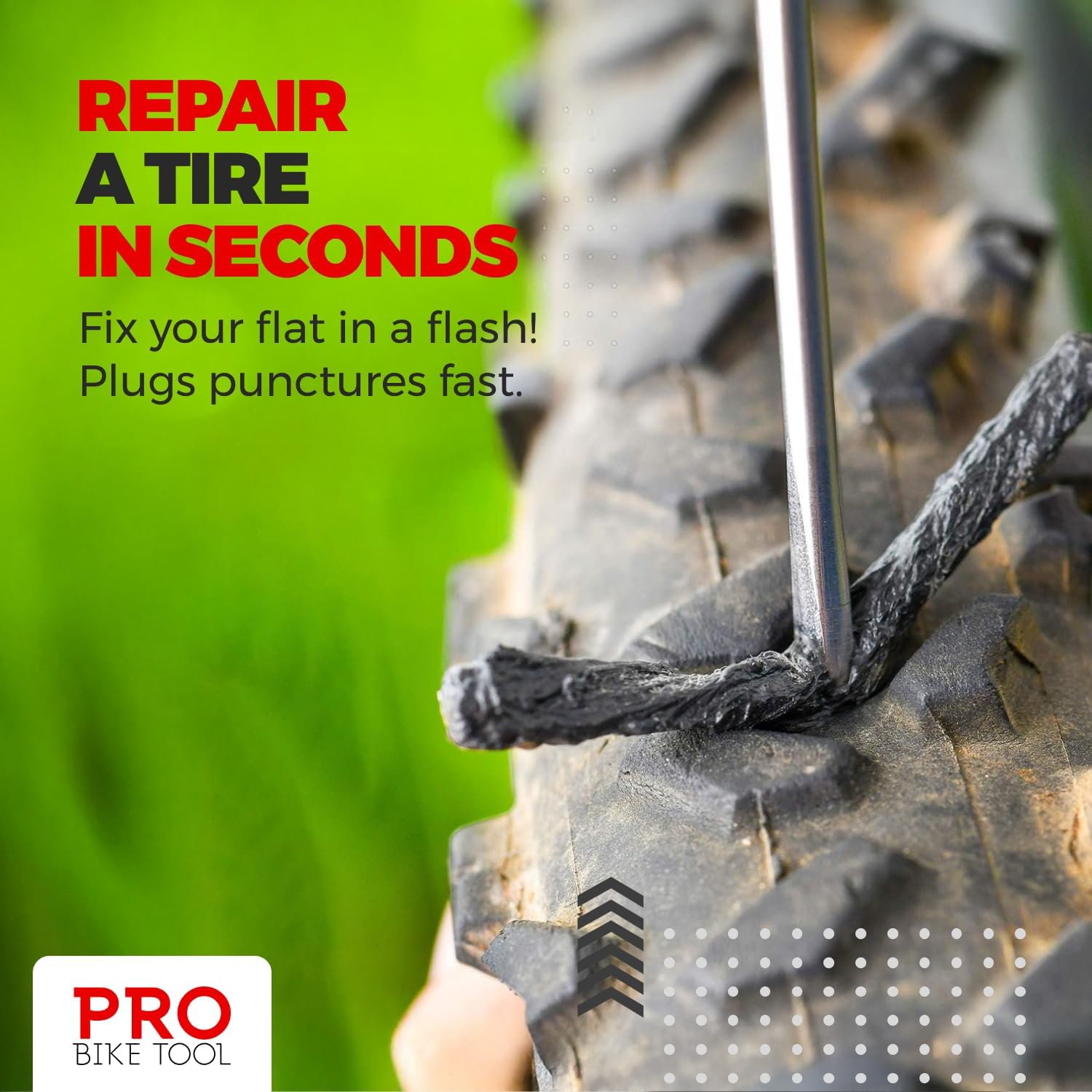
Plug delivery method. There are two dominant systems. The first is the insertion-needle design: you thread a strip of tacky rubber material (often called a “bacon strip” or “worm” because of how it looks) onto a needle-like tool, push it into the puncture, and pull the tool out, leaving the rubber strip behind as a plug. This is the OG method — cheap, proven, and universally understood. The second is the self-contained injector design, where the plug is pre-loaded into a cartridge-style body and driven into the tire with a single push, like a blunt syringe. Dynaplug popularized this category. It’s faster and requires less finesse under pressure, but costs significantly more.
Plug material. Soft rubber worms (the classic bacon strip) are flexible, cheap, and work well in most tires. Dynaplug’s mushroom-head plugs use a harder rubber compound that reviewers at BikeRadar describe as “extremely reliable for larger punctures where sealant alone has failed.” The mushroom cap creates a mechanical seal at the hole rather than just filling it. Trade-off: they cost more per plug and don’t work as well in tiny pinhole punctures where a thin worm strip seals more elegantly.
Body material. Aluminum vs. carbon. If you’re weight-counting: Dynaplug’s aluminum Micro Pro comes in around 28g; the carbon version drops to roughly 20g. Cycling Weekly’s tubeless repair kit buyer’s guide notes the carbon body has become popular in the road racing segment specifically because “every gram matters when you’re managing total saddlebag weight.” For most riders — including committed gravel racers — the aluminum body is the call. You save real money (roughly $60–$80) for an 8-gram difference.
Kit completeness. Some kits are plug delivery only; you still need a separate inflator. Others bundle a CO₂ inflator head, cartridges, and tire levers. Full bundles cost more upfront but eliminate the “did I grab everything?” saddlebag audit before every ride.
The Tier Breakdown: By the Numbers
| Tier | Price Range | Best For | Plug Type |
|---|---|---|---|
| Entry (Bacon Strip) | $8–$20 | Commuters, backup kits | Worm / strip |
| Mid-Range | $25–$60 | Gravel, XC, trail riders | Worm or mushroom |
| Performance | $65–$120 | Road racers, endurance athletes | Mushroom / injector |
| Premium | $130–$200+ | Weight-obsessed racers, pros | Carbon-body injector |
Tier One: Bacon Strip Kits ($8–$20) — More Capable Than They Look
The bacon strip kit is not a compromise. It’s actually the correct answer for a large segment of cyclists, and Road Bike Rider’s flat tire repair guide makes this case clearly: the insertion-needle method has been used successfully in the automotive tire industry for decades and translates well to bicycle tubeless with zero modifications needed.
The standard kit — a T-handle or folding needle tool plus a handful of rubber plugging strips — costs between $8 and $20 at most bike shops and online. Dynaplug’s own entry-level “Pill” kit lives in this tier. So do offerings from Stan’s NoTubes, Lezyne, and generic automotive-style kits repurposed for cycling.
The real limitation isn’t the plug quality — it’s execution under pressure. Threading a slippery strip onto a needle while your tire is losing pressure and your hands are cold and dirty is harder than it sounds. First-timers often pull the strip through with the tool by accident, wasting the plug. The technique is learnable, but it has a learning curve that the injector-style kits largely eliminate.
Honest verdict: If you’ve done this a few times, a $12 bacon strip kit earns its saddlebag space indefinitely. If you’re new to the method or want something your riding buddy can use on your tire without a tutorial, step up.
Tier Two: Mid-Range Injector Kits ($25–$60) — The Sweet Spot for Most Riders
This is the tier where most intermediate-to-advanced cyclists should spend their money. Owners consistently report that injector-style tools in this range hit the right balance: fast insertion, reliable seals, reasonable plug inventory, and durable enough bodies to survive being bounced around in a saddlebag for years.
Dynaplug Racer lands in the lower end of this tier and is the name reviewers at Pinkbike’s tubeless repair kit roundup come back to repeatedly as the value anchor of the injector category. The Racer uses Dynaplug’s mushroom-head plug system in a compact aluminum body — no pre-threading required. You uncap it, push it into the puncture, pull straight back, and the plug stays. Owners report that the mushroom cap design seals large, ragged punctures (the kind sealant alone won’t touch) more reliably than strip plugs.
Muc-Off Tubeless Repair Kit is another frequently cited mid-range option, appearing in BikeRadar’s best tubeless repair kits roundup as a standout for completeness: plug tool, plugs, tire levers, valve core tool, and CO₂ inflator head in a single pouch. For riders who want everything bundled and organized without building a kit from parts, reviewers note it’s a strong all-in-one package.
Stan’s NoTubes Dart takes a third approach: pre-formed rubber dart plugs that get inserted with a dedicated tool and then the tail gets snipped flush. Outside Online’s best bike repair kits feature lists it as a reliable option particularly favored by mountain bikers dealing with thorn-country trails where volume plugging capability matters.
The mid-tier trade-off: You’re paying for speed and foolproof insertion. That premium over a bacon strip kit is real — but if a fumbled plug costs you 10 minutes on a remote trail, or worse, forces a tube-in because the strip pulled through, the $30 premium looks small.
Tier Three and Four: Performance and Premium ($65–$200+) — When Weight Is a Spec
Once you cross $65, you’re largely paying for two things: lighter materials and premium plug capacity per carry weight.
Dynaplug Micro Pro (Aluminum) is the reference point for serious road and gravel riders. At roughly 28g with plugs loaded, it disappears in a saddlebag. Cycling Weekly’s buyer’s guide notes it “remains the benchmark for road-oriented tubeless repair” in 2025–2026. It holds two plugs loaded, with room to carry extras in the cap. Owners on long-distance events consistently describe it as their non-negotiable kit item.
Dynaplug Micro Pro (Carbon) saves approximately 8 grams over the aluminum body and costs roughly $60–$80 more depending on retailer. VeloNews’s tubeless tire tech explainer notes that the carbon body version “finds its audience among weight-obsessive racers and those building a complete gram-counted setup.” For most riders, this is the wrong call — 8 grams is meaningless in isolation. For a rider who has already optimized everything else and is counting total saddlebag weight down to the gram, it’s a logical last step.
Genuine Innovations and Lezyne both offer premium CO₂ integrated kits that bundle inflators with plug tools at the high end of this tier. Road racers who run CO₂-only inflation (no pump) should evaluate these bundles, as they reduce the total carry to a single object.
The honest performance-tier math: Dynaplug Micro Pro aluminum vs. carbon is an 8-gram, ~$70 decision. Unless you’re competing at a level where weight directly translates to race outcome and you’ve already eliminated every other gram available, the aluminum body is the rational pick.
Decision Rules: If X, Then Y
You’ve got the framework. Here’s how to close the decision:
If you’re a commuter or recreational rider who rarely ventures more than 15 miles from home: A $10–$15 bacon strip kit is your answer. Carry a spare tube too. You don’t need more than this.
If you’re a gravel rider, trail mountain biker, or road cyclist who rides regularly and remotely: The Dynaplug Racer or Muc-Off kit bundle ($30–$55 tier) is where you should land. You get foolproof insertion speed, reliable mushroom-cap sealing, and you’ll never wish you’d spent less when you’re 40 miles out.
If you’re a weight-conscious road or gravel racer running a fully tubeless setup and counting grams: The Dynaplug Micro Pro aluminum is your kit. It’s the minimum-viable high-performance option without paying the carbon premium.
If you’re a true weight-obsessive racer who has already optimized everything else: The Dynaplug Micro Pro carbon makes sense. But be honest with yourself — this is the last 8 grams, not the first.
If you’re building a complete kit from scratch and want one purchase to cover everything: Prioritize a bundled kit (Muc-Off or a Lezyne combo set) that includes inflator, valve core tool, plugs, and levers. The minor premium over buying parts individually is worth the organizational clarity.
The plug kit you actually carry is infinitely better than the perfect kit sitting on your workbench. Start with the tier that fits your budget and riding profile today. As your mileage and terrain ambitions grow, the upgrade path is clear — and the entry-level kit you bought first makes a solid backup or loan-out kit for a riding buddy who’s still running tubes.